
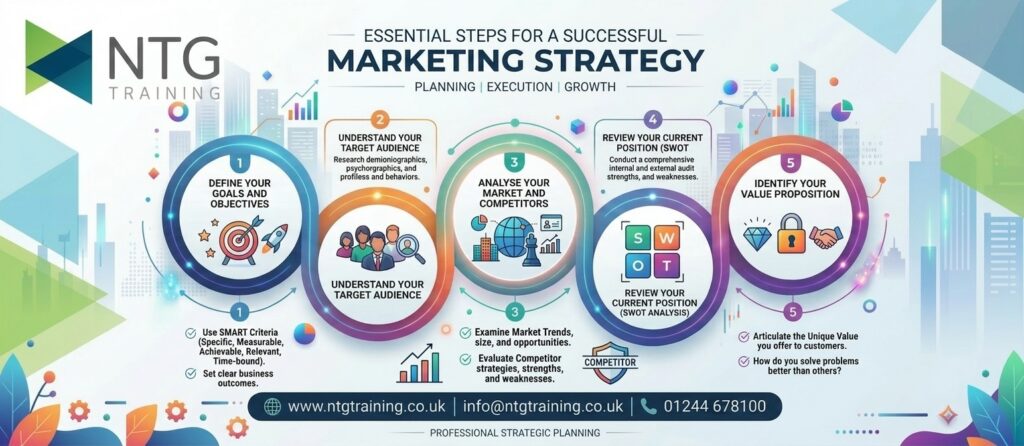
Step 1: Define Your Marketing Goals and Objectives
 The foundation of any marketing strategy begins with clearly defined goals. Businesses must first determine what they want their marketing activities to achieve before deciding how those goals will be reached.
Marketing goals should always align with the wider objectives of the business. For example, a company looking to expand its market presence may prioritise increasing brand awareness, while a business focused on revenue growth may aim to generate more qualified leads or improve conversion rates.
To ensure marketing objectives are meaningful and achievable, many businesses use the SMART framework. SMART goals are specific, measurable, achievable, relevant, and time bound. This approach helps organisations track progress and evaluate the effectiveness of their marketing campaigns.
For instance, rather than setting a vague goal such as increasing online engagement, a business might aim to increase website enquiries by 30 percent within six months through targeted digital marketing campaigns. Clear goals provide direction for marketing teams and ensure that resources are used effectively.
Step 2: Understand Your Target Audience
 Once your goals are defined, the next step is understanding the audience you are trying to reach. Successful marketing is built on a deep understanding of customer needs, behaviours, and motivations.
Your target audience consists of the individuals or organisations most likely to benefit from your product or service. By identifying this group, businesses can tailor their messaging and communication channels to reach the right people.
Audience research often includes factors such as age, location, job role, interests, and purchasing behaviour. However, effective marketing goes beyond basic demographics. Businesses should also understand the challenges their customers face and the problems they are trying to solve.
Many organisations develop customer personas to help visualise their ideal customers. These personas represent fictional profiles based on real data and insights, helping businesses create marketing messages that feel more relevant and personalised.
When businesses understand their audience, they can create marketing campaigns that resonate with customers, improve engagement, and increase the likelihood of conversion.
Step 3: Analyse the Market and External Environment
 Understanding the wider business environment is an essential part of developing a successful marketing strategy. Markets are constantly changing due to economic conditions, technological developments, and shifting consumer expectations.
One useful tool for analysing the external environment is a PESTLE analysis, which considers the political, economic, social, technological, legal, and environmental factors that may influence a business.
Political factors may include government policies or funding programmes that affect certain industries. Economic conditions such as inflation or changes in consumer spending can influence purchasing behaviour and marketing budgets.
Social trends also play an important role in shaping customer expectations. For example, the growth of digital learning and flexible training options has changed how people access professional development.
Technological developments continue to transform the marketing landscape, particularly through digital platforms, data analytics, and artificial intelligence.
Legal and environmental considerations can also affect marketing activities. Regulations relating to advertising standards, data protection, and sustainability expectations must be considered when developing a marketing strategy.
By conducting a PESTLE analysis, businesses can identify external opportunities and risks that may influence their marketing approach.
Step 4: Evaluate Your Business Position
 Before developing marketing campaigns, businesses must understand their current strengths and limitations. A SWOT analysis is a useful tool that helps organisations evaluate their position by examining strengths, weaknesses, opportunities, and threats.
Strengths represent the internal advantages that differentiate a business from its competitors. These may include strong expertise, a recognised brand, high-quality products, or strong customer relationships.
Weaknesses refer to internal limitations that could affect performance. These might include limited marketing resources, low brand awareness, or gaps in digital skills.
Opportunities represent external trends or developments that could support business growth. For example, increasing demand for digital training or new markets opening through technological innovation.
Threats refer to external challenges such as increased competition, economic uncertainty, or changing regulations.
Conducting a SWOT analysis provides a balanced understanding of where the business currently stands. This information allows organisations to develop marketing strategies that maximise strengths while addressing potential challenges.
Step 5: Build Your Marketing Strategy Using the 7 Ps
 Once the research and analysis stages are complete, businesses can begin developing their marketing strategy using the 7 Ps of marketing. This framework ensures that all key elements of delivering value to customers are considered.
The first element is product, which refers to the goods or services offered by the business. Organisations must ensure their product meets customer needs and provides clear value.
The second element is price, which reflects how the product is positioned within the market. Pricing strategies should balance affordability for customers with profitability for the business.
Place refers to where customers access the product or service. In many industries, this now includes a combination of physical locations and digital platforms.
Promotion includes the communication methods used to reach potential customers. This may involve advertising, content marketing, social media, email campaigns, and public relations.
The final three elements focus on service delivery. People represent the employees who interact with customers and shape their experience. Process refers to the systems used to deliver services efficiently and consistently. Physical evidence includes tangible elements such as branding, websites, testimonials, and customer reviews that build trust and credibility.
By considering each of these elements, businesses can create a comprehensive marketing strategy that delivers consistent value and supports long-term growth.
Conclusion
Building an effective marketing strategy requires more than simply promoting products or services. It involves understanding customers, analysing the market, and aligning marketing activity with business objectives.
By following these five steps, businesses can develop a structured approach to marketing. Defining clear goals provides direction, understanding the target audience ensures relevance, and analysing the market helps organisations anticipate opportunities and challenges.
Strategic tools such as PESTLE and SWOT analysis provide valuable insights into the business environment, while the 7 Ps of marketing help organisations design effective marketing activities.
Businesses that invest time in strategic planning are far more likely to stand out in competitive markets, attract the right customers, and achieve sustainable long-term growth.