Unlocking Employee Potential: A Deep Dive into Maslow’s Hierarchy of Needs for the Modern Workplace
In the ever-evolving landscape of business, one constant remains: the critical role of human capital. Engaged, motivated employees are the bedrock of any successful organisation. But how do we truly understand and tap into what drives our teams? The answer, surprisingly, lies in a psychological theory developed over 80 years ago: Abraham Maslow’s Hierarchy of Needs. Far from being a relic of academic textbooks, Maslow’s framework offers profound insights into employee motivation, providing a powerful roadmap for employers seeking to cultivate a thriving and productive workforce.
The Foundation: Understanding Maslow’s Hierarchy
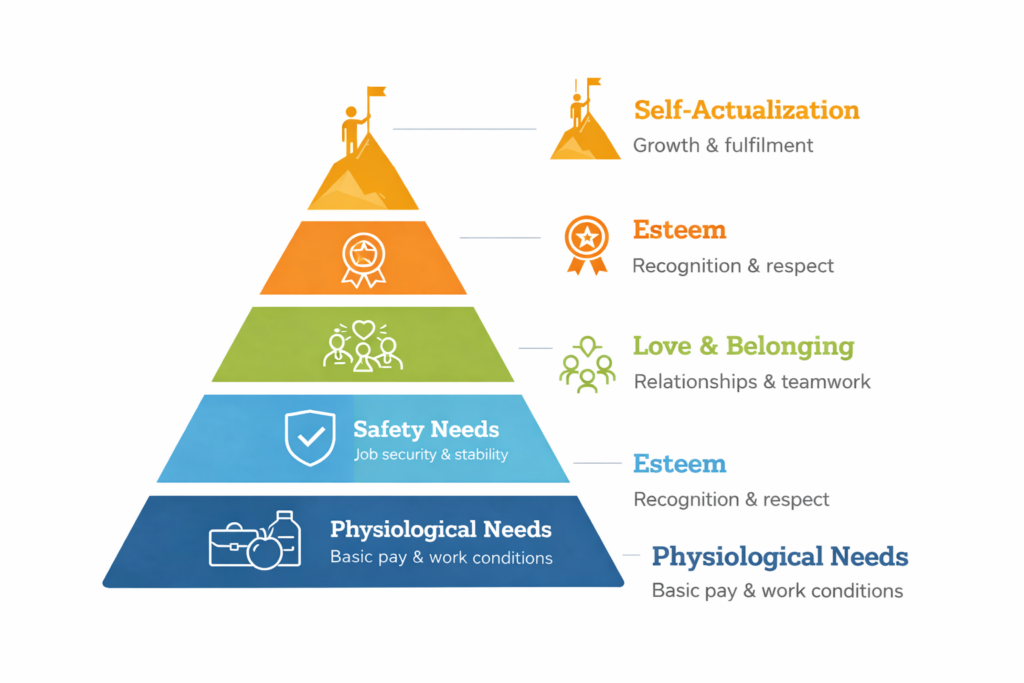
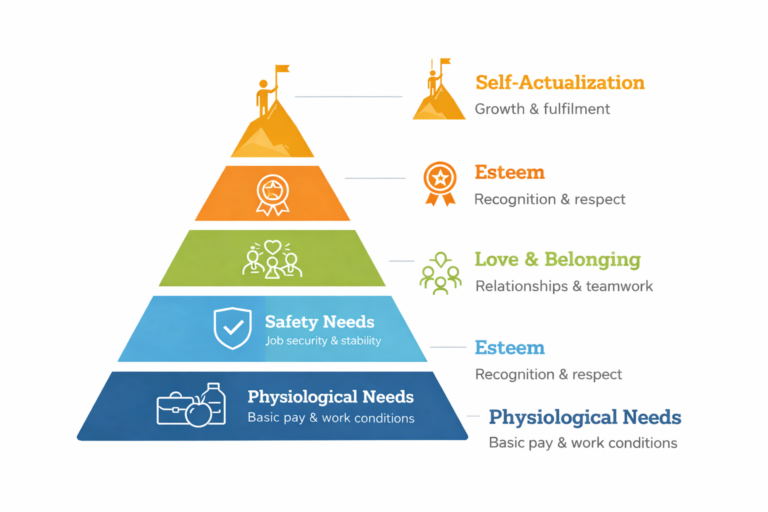
At its core, Maslow’s Hierarchy of Needs proposes that human beings are driven by a series of five fundamental needs, arranged in a pyramid. We strive to fulfil lower-level needs before moving on to higher-level ones. Think of it like building a house – you need a solid foundation before you can add the roof.

Physiological Needs (The Base of the Pyramid):
These are the most basic and primal needs for survival. In a personal context, this includes food, water, sleep, and shelter. For an employee, this translates directly to a liveable wage that covers basic living expenses, and a safe and comfortable working environment with adequate facilities (breaks, restrooms, proper lighting, temperature control). Without these fundamental needs met, an employee will struggle to focus on anything else.

Safety Needs:
Once physiological needs are reasonably satisfied, the desire for security and stability emerges. Personally, this means protection from harm, financial security, and a sense of order. In the workplace, safety needs manifest as job security, health and safety protocols, a clear understanding of expectations and policies, and protection from discrimination or harassment. Employees need to feel safe and secure in their roles to truly commit.

Love and Belonging Needs:
As humans, we are social creatures. We crave connection, acceptance, and a sense of belonging. Personally, this involves friendships, family, and intimate relationships. In the professional sphere, this translates to a positive team environment, collegiality, opportunities for social interaction, and feeling like a valued member of a community. Fostering a sense of belonging combats isolation and enhances collaboration.

Esteem Needs:
Once an individual feels safe and connected, the need for esteem comes to the forefront. This involves both self-esteem (dignity, achievement, mastery, independence) and the esteem of others (reputation, respect, recognition). For employees, this means recognition for achievements, opportunities for growth and development, meaningful feedback, and a sense of accomplishment in their work. When employees feel valued and respected, their confidence and motivation soar.

Self-Actualisation Needs (The Pinnacle):
At the very top of the pyramid lies self-actualisation – the desire to become the best version of oneself, to fulfill one’s full potential. This is about personal growth, creativity, problem-solving, and pursuing one’s passions. In the workplace, this manifests as opportunities for autonomy, challenging projects, innovation, continuous learning, and the ability to contribute meaningfully to the organisation’s mission. Self-actualised employees are often the most innovative and engaged.
Here’s a visual representation of Maslow’s Hierarchy:
Actionable Tips for Employers: Building a Motivated Workforce
Understanding the hierarchy is the first step; the next is to translate this knowledge into tangible strategies. Here are some practical tips for employers to address each level of Maslow’s Hierarchy and foster a truly motivated workforce:
Addressing Physiological Needs: The Foundation of Well-being
- Offer Competitive Wages and Benefits: Regularly review industry benchmarks to ensure your compensation packages are competitive. A living wage isn’t a bonus; it’s a fundamental requirement. Consider comprehensive benefits that address health and financial security.
- Provide a Comfortable and Safe Environment: Invest in ergonomics, proper lighting, temperature control, and clean facilities. Ensure access to clean drinking water, adequate break rooms, and opportunities for regular breaks. A comfortable environment reduces stress and improves focus.
- Promote Work-Life Balance: Encourage reasonable working hours and respect personal time. Offer flexible working arrangements where feasible. Exhausted employees are less productive and more prone to burnout.
Bolstering Safety Needs: Creating Security and Stability
- Ensure Job Security (Where Possible): Communicate clearly about company performance and future plans. Transparency builds trust. When difficult decisions need to be made, handle them with empathy and fairness.
- Implement Clear Policies and Procedures: Provide employees with a comprehensive handbook and ensure they understand company expectations regarding conduct, performance, and advancement. Clarity reduces anxiety.
- Prioritise Health and Safety: Adhere to all safety regulations and provide regular training. A visible commitment to employee well-being fosters a sense of security.
- Establish a Culture of Respect and Non-Discrimination: Implement clear policies against harassment and discrimination, and ensure there are accessible channels for reporting concerns. A safe workplace is one where everyone feels respected.
Fostering Love and Belonging Needs: Building Community
- Encourage Teamwork and Collaboration: Create opportunities for employees to work together on projects, share ideas, and support one another. Team-building activities, both formal and informal, can be highly effective.
- Promote Open Communication: Establish channels for employees to voice their opinions, ask questions, and provide feedback. Regular team meetings, suggestion boxes, and open-door policies can foster a sense of inclusion.
- Organise Social Events: Host company lunches, holiday parties, or team outings. These informal gatherings help build camaraderie and strengthen interpersonal relationships.
- Onboarding Programs: A robust onboarding process helps new hires feel welcome and integrated into the team from day one. Assigning mentors can further enhance this feeling of belonging.
Meeting Esteem Needs: Recognising and Empowering
- Provide Meaningful Recognition: Acknowledge and celebrate achievements, both big and small. This can be through formal awards, public praise, or simply a heartfelt “thank you.” Recognition validates effort.
- Offer Opportunities for Growth and Development: Invest in training programs, workshops, and mentorship opportunities. Employees want to learn new skills and advance their careers.
- Provide Constructive Feedback: Regular, specific, and actionable feedback helps employees understand their strengths and areas for improvement, contributing to their sense of competence.
- Delegate Responsibilities and Empower Employees: Give employees ownership over tasks and projects. Trusting them with responsibility shows respect for their capabilities.
Enabling Self-Actualisation Needs: Unleashing Full Potential
- Foster Autonomy and Flexibility: Where appropriate, allow employees to have a say in how they approach their work, set their own schedules, or choose projects that align with their interests.
- Encourage Creativity and Innovation: Create an environment where employees feel safe to experiment, share new ideas, and challenge the status quo. Recognise and reward innovative thinking.
- Provide Challenging and Meaningful Work: Align tasks with individual strengths and passions. Ensure employees understand how their work contributes to the larger organisational goals.
- Support Continuous Learning: Provide access to resources for ongoing education, professional development, and skill enhancement. This could include courses, conferences, or internal knowledge-sharing sessions.
Here’s a visual representation of Maslow’s Hierarchy: